2021-09-27
Cooperation with the IGS Alexej von Jawlensky School
The Reinhard & Sonja Ernst Foundation is the sponsor and owner of the new Reinhard Ernst Museum. An institution that has been committed to art and culture, the preservation of historical heritage and especially to children and the elderly since 2004. It was therefore very important for this sponsoring couple that young people in particular are also considered when planning and implementing the museum and have the opportunity to get to know the range of abstract art. As such, Reinhard Ernst never tires of emphasising that mornings in the museum will be dedicated to schoolchildren, students and their teachers and training staff. In addition to the exhibition rooms, a very special creative room is available to them in the museum, where you will look for brushes and pots of paint in vain.
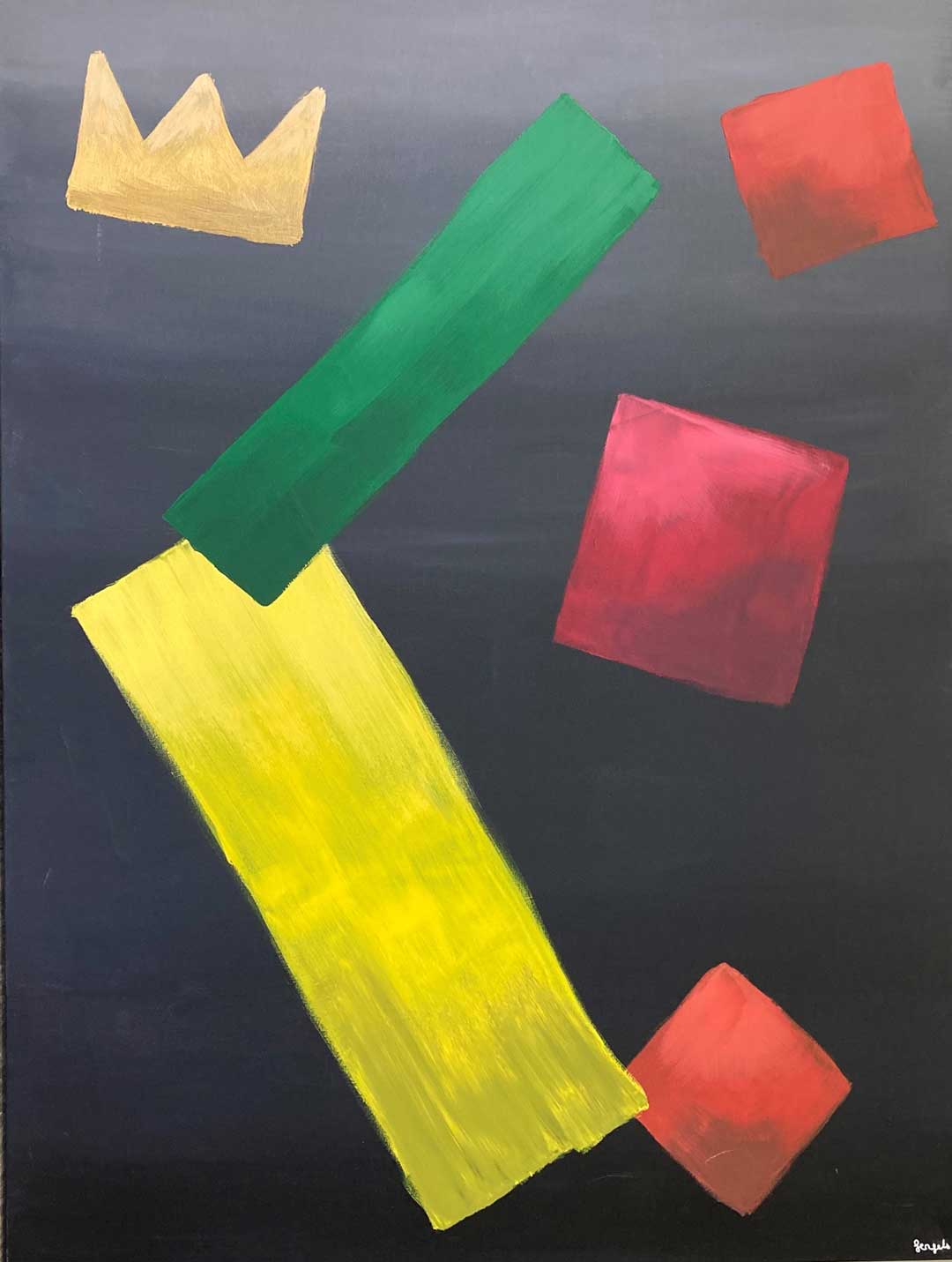
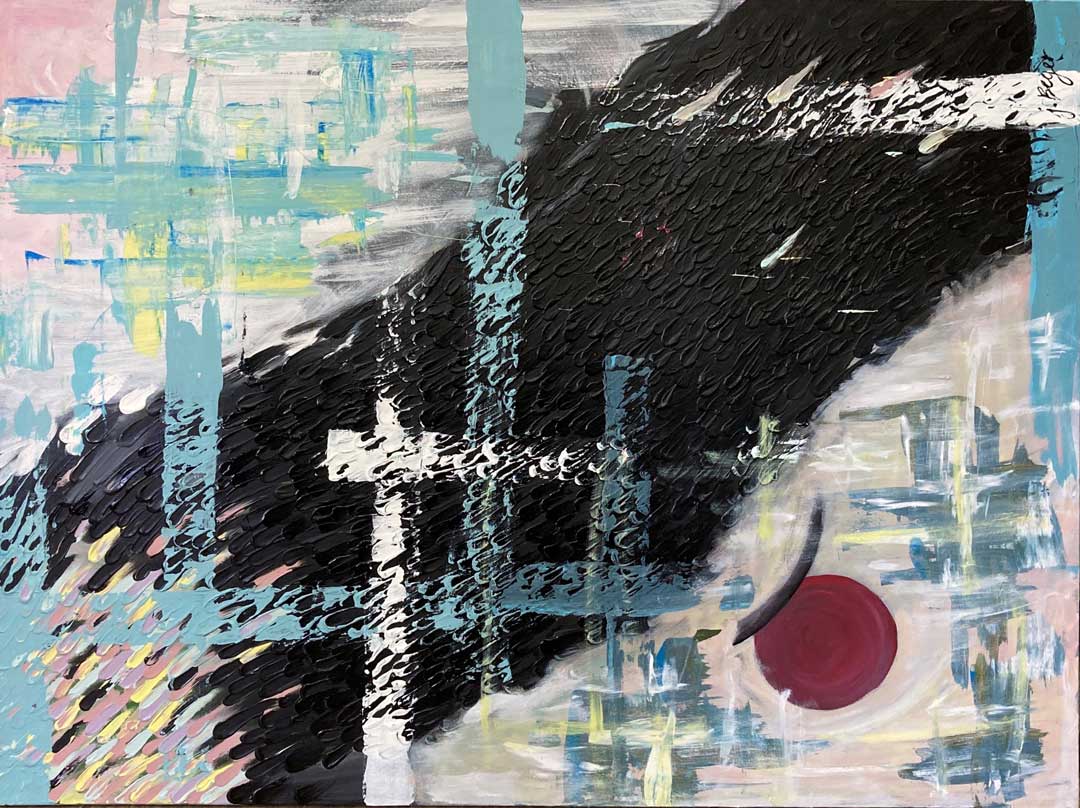
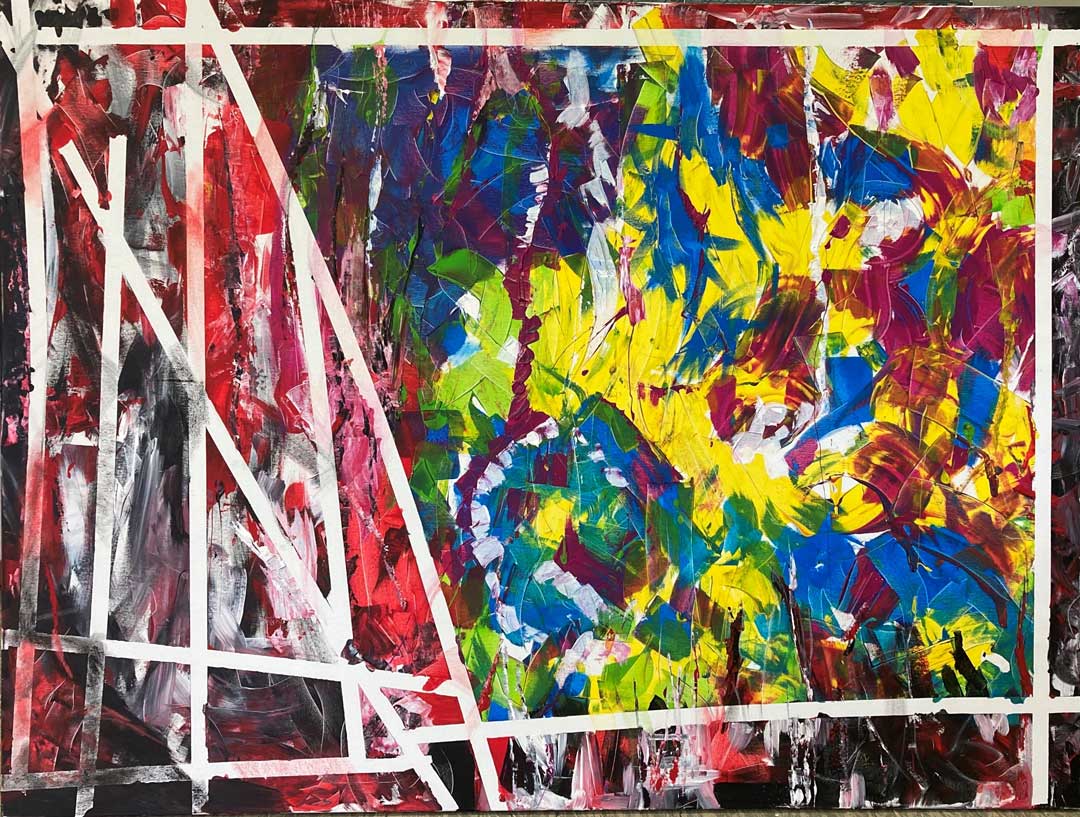
An impression of the creative energy and interpretation of abstract art can currently be seen on the occasion of the construction site fence exhibition Abstraction in the Square on the corner of Wilhelmstrasse and Rheinstrasse. Young people from 11 educational institutions in Wiesbaden have created 76 fantastic works each measuring one square metre and used them to embellish the 114-metre wooden fence around the building site.
However, the exhibition also established longer-term connections with the schools. Among other things, a cooperative venture has been concluded with the IGS Alexej von Jawlensky School. In addition to technical painting utensils, it already includes access to the collection, scientific expertise and various projects. One stroke of luck we had were the committed teachers Elena Hartmann, Lisa Guhrsch and Esra Hofacker, who included abstract art in their curriculum at an early stage.
In an interview, the three teachers tell us how this initiative has developed since the opening event and how they have dealt with the last 12 months with their young artists in the Covid era.
How was the feedback in response to Abstraction in the Square?
The schoolchildren who were allowed to take part in this project were all thrilled. They very much enjoyed the creative work in the open air and found it exciting to try out new painting techniques. In addition, they were incredibly proud that their works of art were exhibited on Wilhelmstrasse and therefore accessible to the public at large. A visit by and report on Hessenschau (TV news programme) also contributed to the fact that the schoolchildren felt they and their work were very much appreciated.
What do the schoolchildren take away from the cooperation between the Museum Reinhard Ernst and their school?
We are still at the start of our collaboration and our schoolchildren were dealing with abstract art for the first time during the last school year. One aspect that is mentioned most often is the realisation of how difficult it is to create an abstract work of art. This has also contributed to the fact that the prejudices against abstract art – “But anyone can do that!” – have been broken down and a new appreciation of this kind of art has developed. The schoolchildren now appreciate abstract art more and deal very specifically with the painting techniques that are behind it. We are seeing a huge increase in knowledge of design vocabulary, positioning in the image and use of colour.
Unfortunately, Covid slammed the brakes on our ambitions and our school routine was turned upside down.
What ideas, approaches and projects are there for this school year?
Fortunately, some schoolchildren in years 9 and 10 were able to get to know numerous artists in the Ernst Collection not only in theory in the last school year but also to try out their techniques in practice. This exceptional optional subject will also be available for years 9 and 10 during this school year. In the course of this year, they will each work on a large-format work of art. In year 5, abstract art and the Ernst Museum will be part of the main subject for the first time this year. In previous years, the focus was especially on the Wiesbaden Museum and the patron of our school. This year, we would like to shift our focus somewhat. The obligatory visit to the Wiesbaden Museum will of course remain a fixture, especially as there is the Everything! 100 Years of Jawlensky in Wiesbaden exhibition from 17 September. However, at the same time, we would also like to arouse the schoolchildren’s curiosity about the new Reinhard Ernst Museum and we are planning a little rally on site. Knowledge about the old and the new museum should not only be acquired theoretically this year. In practical terms, we would also like to establish a connection between the two museums, not least because if the schoolchildren are familiar with the abstract Jawlensky Köpfe (Heads), they can build a wonderful bridge to the history of abstract art in the Ernst Museum. Our practical work will involve first getting the schoolchildren to paint in Jawlensky’s style and then create their own new works in the form of alienated abstraction. The highlight of the school year will be a painting event in public in the summer of 2022. We don’t want to reveal all the details yet, but before the museum opens, the schoolchildren at MRE Open Air will give interested citizens of Wiesbaden an insight into their practical work and thus arouse their curiosity about the Ernst Collection as well.
Was it difficult to get the schoolchildren to move from figurative painting to more abstract expression?
Yes, in fact most schoolchildren sometimes find this step very difficult. This is where they need a lot of input from us as art teachers. We see it as enriching and challenging to sensitise our pupils to the issues of colour, surface, space and effect in abstract art.
How do you and your colleagues integrate the subject of abstract art and the content of the Reinhard Ernst Collection in your curriculum?
The expansion of the school’s internal curriculum is a process that unfortunately had to pause temporarily due to Covid. We’re still at the beginning but very glad that we were able to establish Abstract Art as an optional subject in the last school year. The focus this year is now on the younger schoolchildren. First of all, we will focus on the contrasts but also what we have in common with the Wiesbaden Museum and its works. As a culture school, in addition to our practical work in art classes, we also want our pupils to become ambassadors for the Museum Reinhard Ernst and that they will consider it their museum after it opens.
From an educational perspective: what can schoolchildren learn from abstract art?
To start with, it is mainly about how different it is from objectivity. The schoolchildren expand their understanding of art and intensify their aesthetic perception. Apart from the fact that they can contextualise the artists and their works better, getting to know about and understanding abstract art is often a question of why. “Is that really art? But anyone can paint that” were comments our schoolchildren frequently made at the beginning. Nonetheless, abstract art arouses their curiosity more than figurative art, as they do not understand it at first glance. It raises many questions, such as “Why does the artist paint it that way and not another way?” or “In what context was the work of art created?” These and other questions are enriching – not only for art lessons but also for the schoolchildren’s personal development.
Thank you for the discussion. We are looking forward very much to MRE Open Air in the summer of 2022 and to welcoming you all at the Museum Reinhard Ernst.