2021-06-01
Construction status report on 1 June 2021
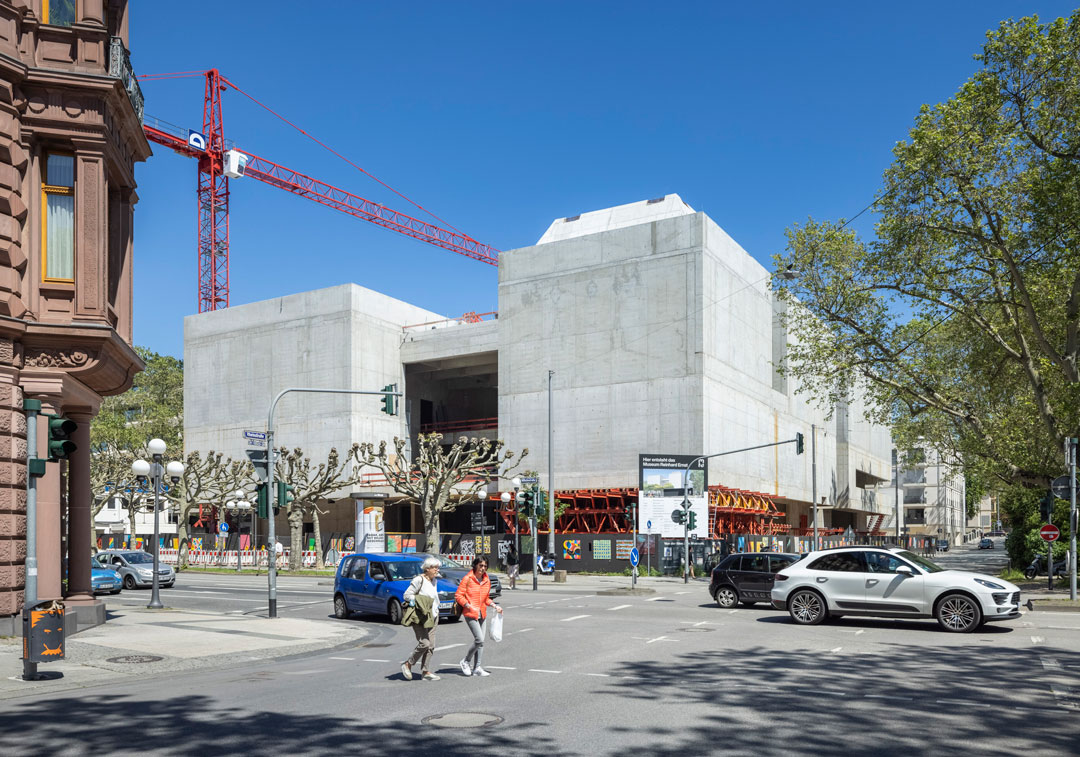
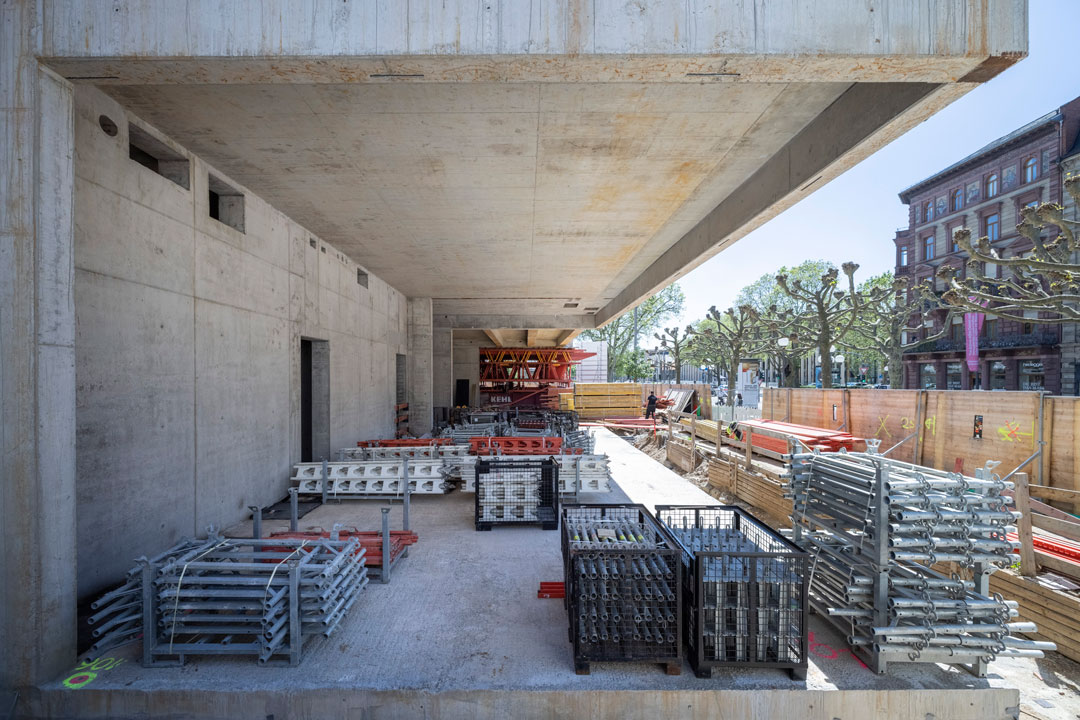
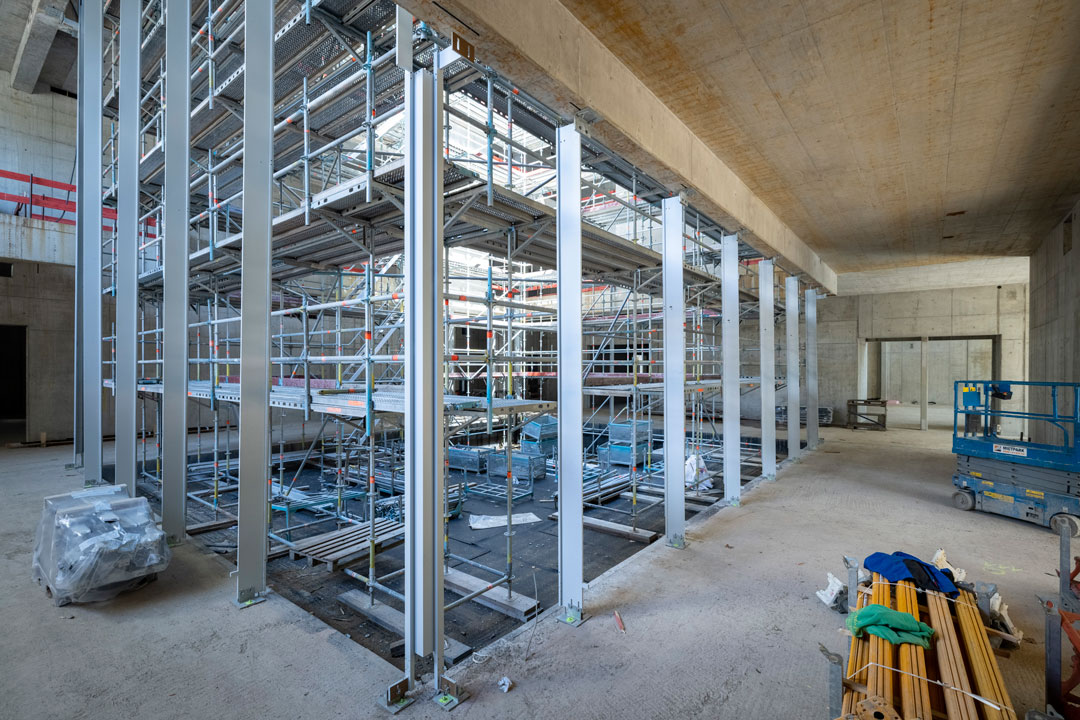
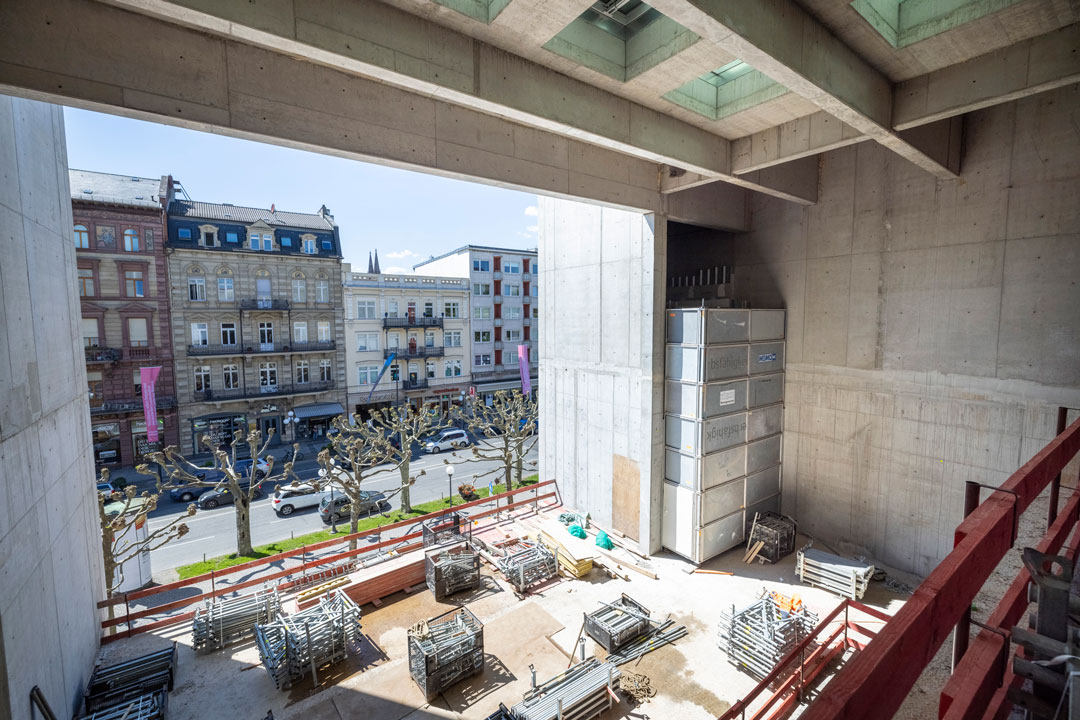
The building site is gradually clearing. The first crane has been dismantled and the second one will leave Wilhelmstrasse 1 in a few days. A whole fleet of lorries are taking most of the telescopic props and formwork girders away, which supported the concrete slabs during the hardening phase. Where the museum bistro will operate on Wilhelmstrasse later on, the broad ceiling now floats in space without any visible support.
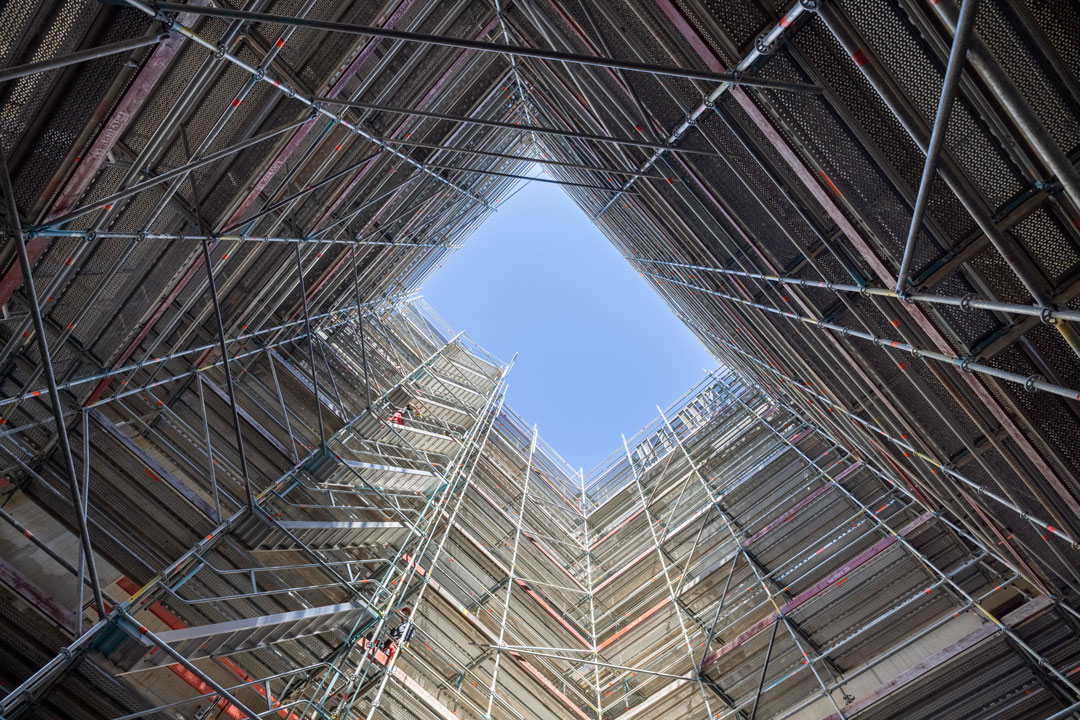
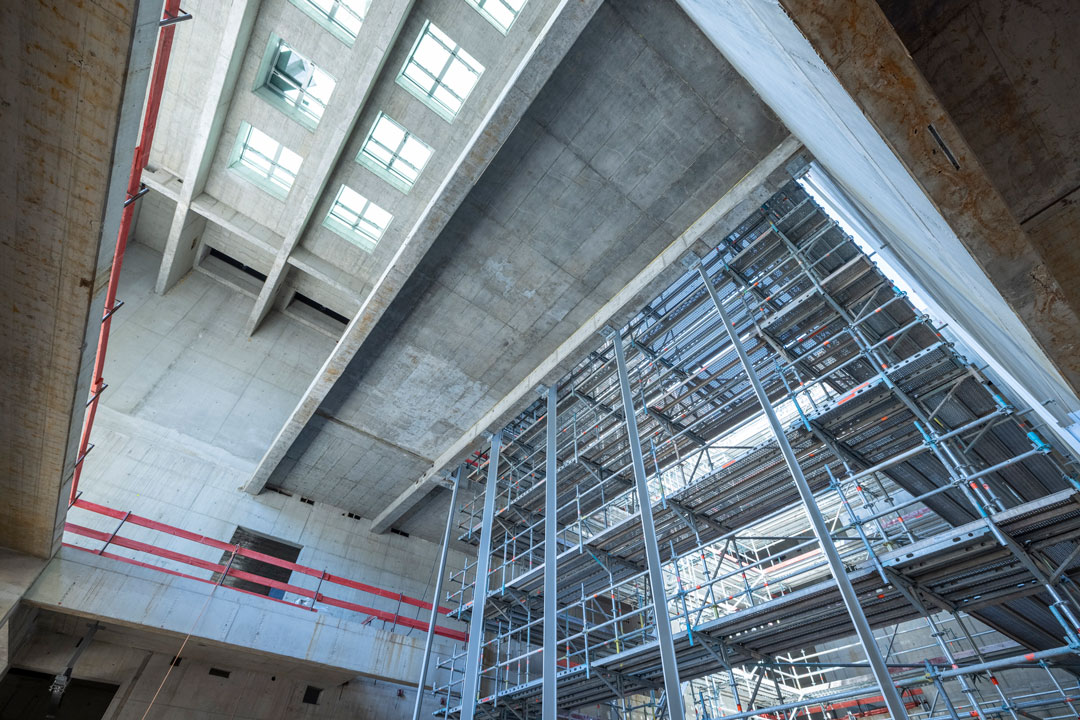
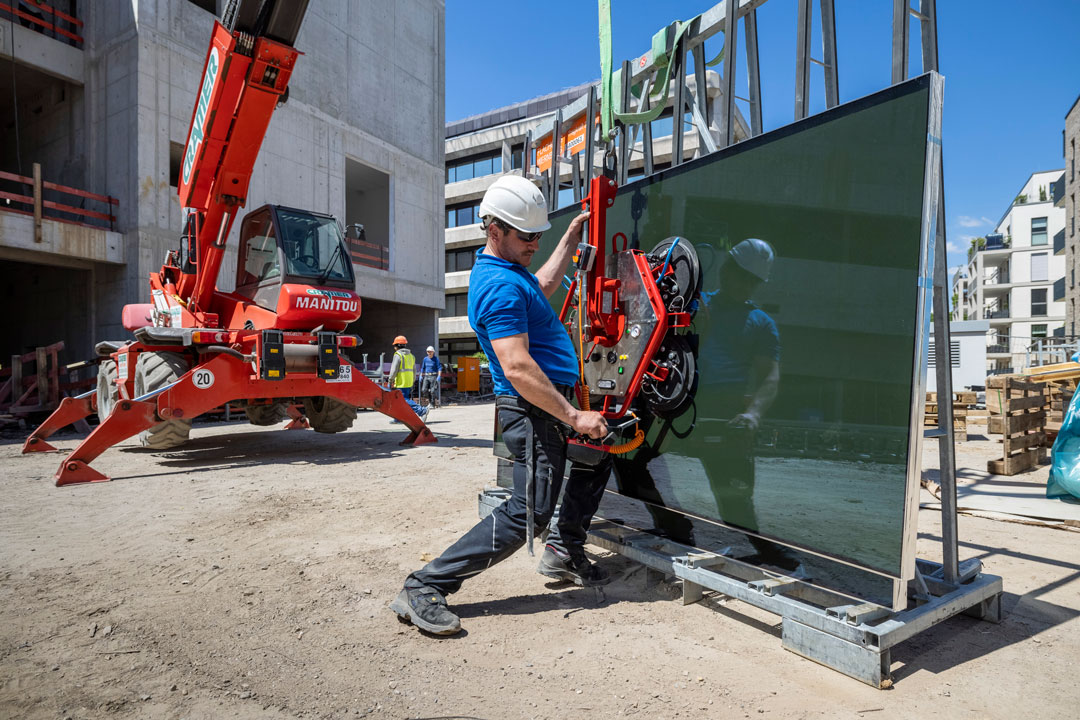
New scaffolding has been erected at the same time. One set rises to the roof in the inner courtyard of the building. The installation of the facade has been underway since last week, as the walls of the open atrium are officially regarded as part of the outside area. Glass will partially extend over several floors and allow a lot of light into the inner courtyard. Around 520 sqm of glass will be installed here. Large panes of up to four metres long and almost two and a half metres wide are being carefully brought into the building, so the previously rather sloped rear entrance structure had to be levelled. Subsequently, the atrium – still with bare concrete walls today – will be clad in white granite. This stone will be shipped from the United States.
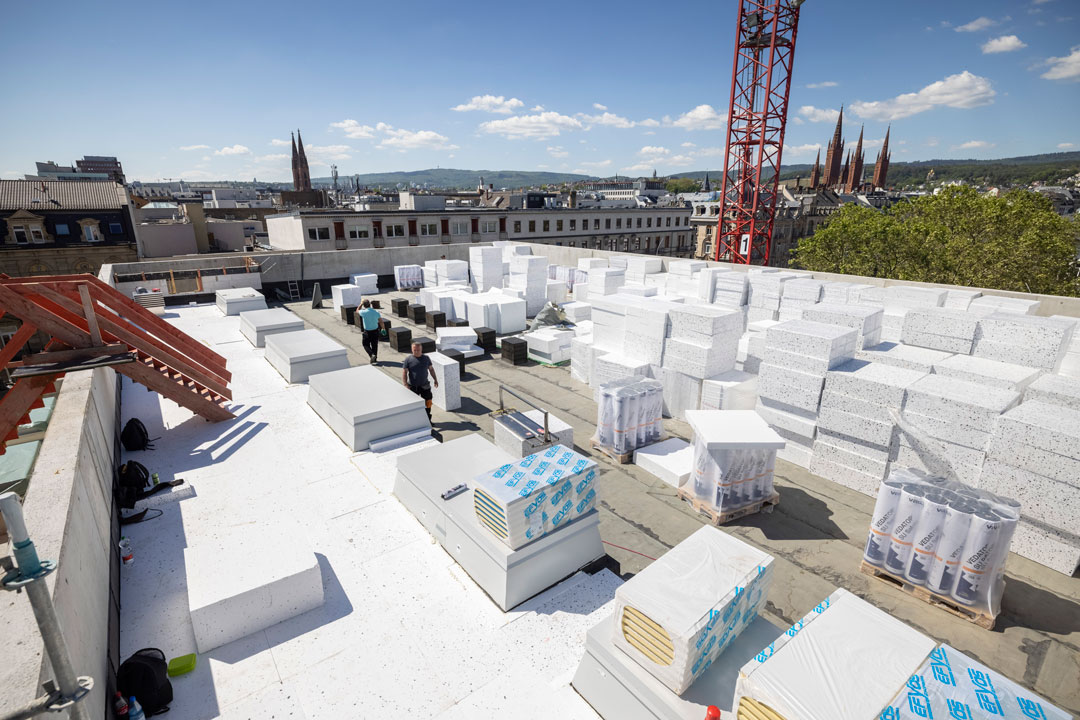
The museum appears to be partly surrounded by a moat. Underground pipelines are being laid in the excavated section alongside the building. Underground buffer storage, known as trenches, are capable of absorbing seeping rainwater, so the adjacent canals will not be overloaded when it rains. What works in principle deep down also works high up; the roof will have green space added later so the water does not drain away so quickly. Plants also produce oxygen, which insects and the environment enjoy. But this is still a long way off, as the museum roof has to be completely insulated and sealed by the end of July. This work has already been completed on the two eastern roofs. In the sandwich process, several layers are placed on top of each other – sealing on concrete, then a slope insulation and two more sealing sheets on top. The slight slope on the roof directs any precipitation to drainage points, where it is channelled through downpipes into the sewage system. After the roofing work has been completed, solar panels will be installed. This is a further contribution to making the building as environmentally sustainable as possible.

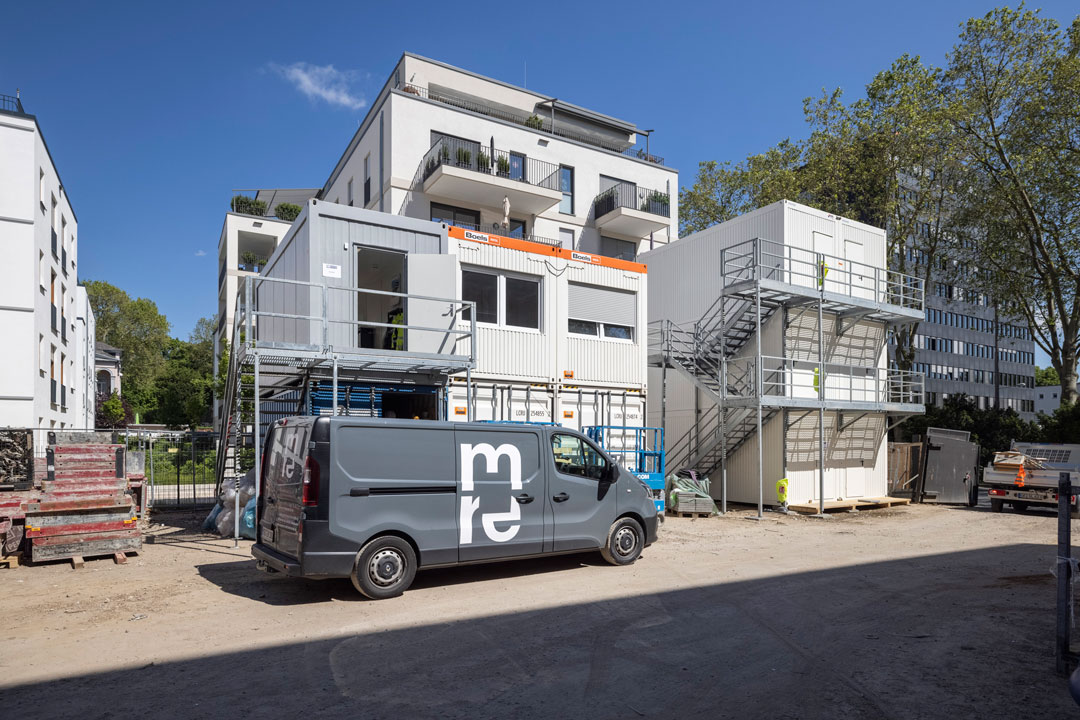
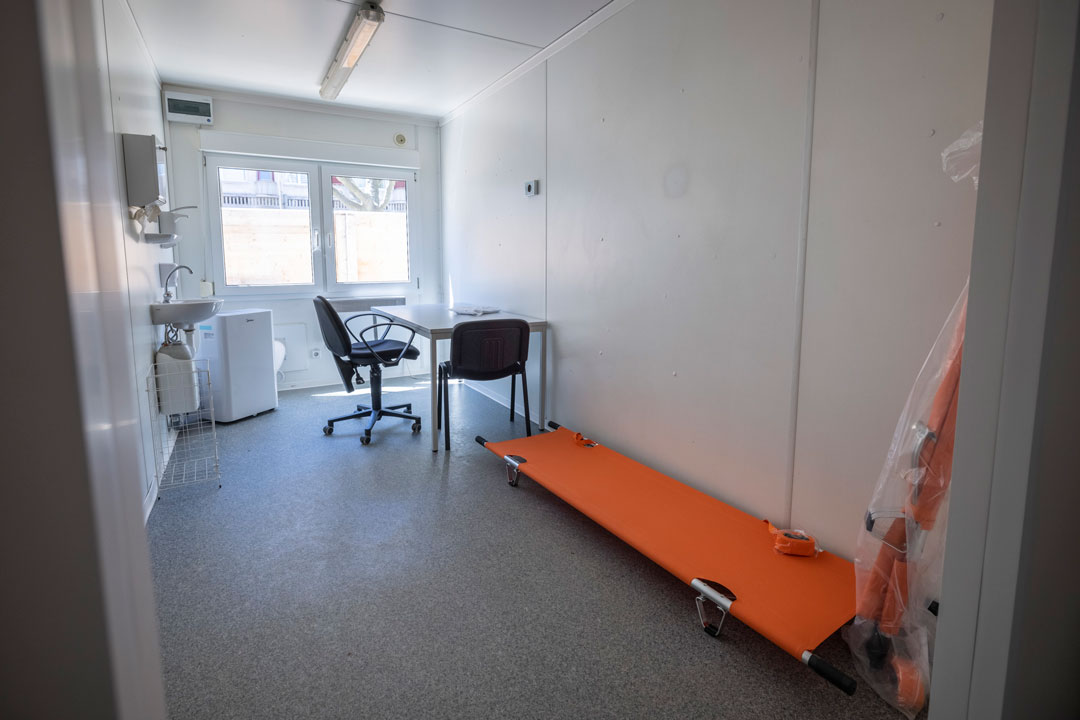
The workers involved in the shell construction are gradually moving away and providing their rooms for other specialists. Facade builders, scaffolders, drywall builders, roofers, fitters, on-site engineers – because so many different tradesmen are deployed on the construction site, the container towers have been expanded to include additional daytime accommodation. This is where every company has dry, warm and Covid-compliant rooms for their breaks from work. The number of employees has exceeded 50, so a first aid container has also been set up to comply with the regulations.
Smoke extraction shafts are currently being boarded and concreted. During these days, the preliminary installation of utilities for electricity, heating, plumbing and ventilation will also begin. Lines will be marked on ceilings, and meter-long pipes for electricity and waste water will be routed through the floors via their own shafts. Completely indifferent to the general turmoil on the construction site, two works of art are already in place. The two-part sculpture Pair has meanwhile been brought to its intended destination. This was the only possible point in time to lift Tony Cragg’s bronze work, which is as heavy as it is tall, through the still unglazed openings and into the building. Pair is now waiting for the construction work to end – and the opening in the autumn of 2022 – permanently assembled, securely packaged, fitted with an alarm system and a closed-off scaffolding construction covered with panels.
Behind the successful developments of recent weeks and months are many committed people in Wiesbaden who are taking care of implementing the plans created by Fumihiko Maki in Tokyo. In our construction status reports in March and April we had already introduced some of these people. Here are two more.
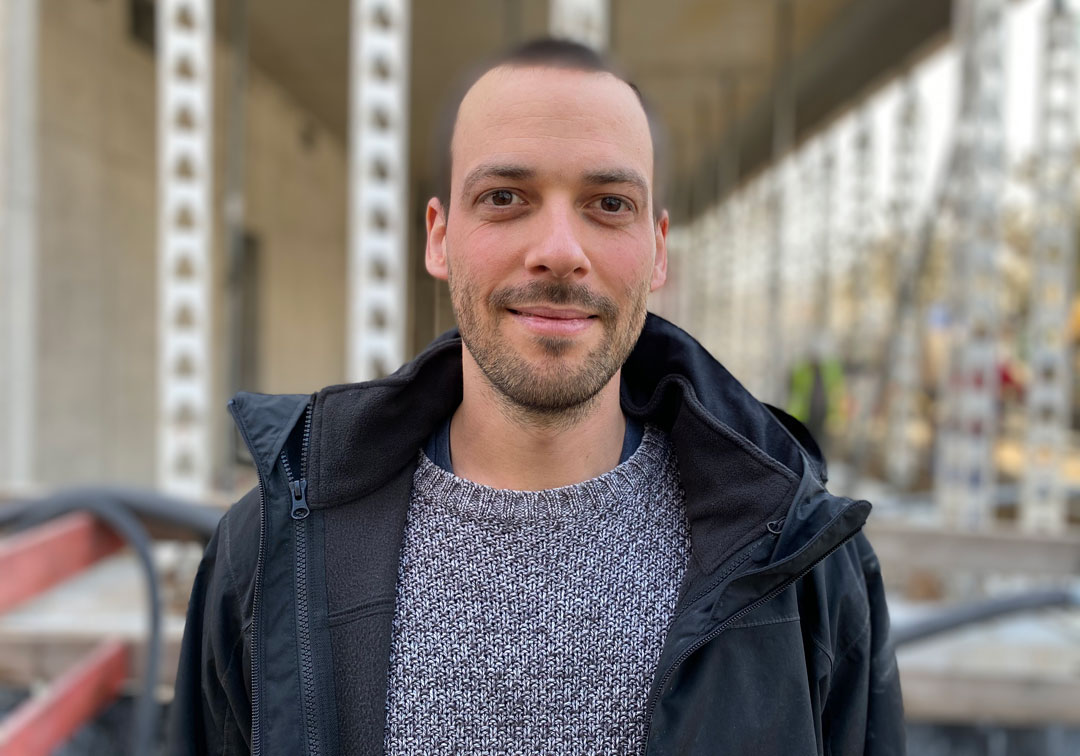
Marcel Hündgen grew up in the resort town of Simmertal. After obtaining his school leaving certificate in Kirn, the 30-year-old studied civil engineering in Mainz, completed his bachelor’s degree in structural analysis and his master’s in construction site management. As a student trainee, Marcel made his initial contact with Schneider + Schumacher. He was immediately attracted to the positive working atmosphere and the creative attitude of the architectural firm with offices in Germany, Austria and China. After completing his studies and before taking up his permanent position in 2017, however, Marcel first took a sabbatical to go hiking in the Himalayas for several months – an experience with some unforgettable impressions of the scenery and wonderful encounters with people. The man from the Palatinate was then involved in the complex renovation and new construction of the Jewish Museum in Frankfurt where Schneider + Schumacher implemented the design of Staab Architekten. The old and new buildings were merged, a challenging assignment involving numerous trades. Marcel Hündgen with Paula Klemp and his boss Jasmin Veigel are now taking care of the progress of work on the Museum Reinhard Ernst. Plus, he cooks meals for his co-workers every day! In addition to good food, the site manager is also interested in art. He recently visited the Macke exhibition at the neighbouring Wiesbaden Museum, and his uncle Engelbert Becker creates abstract paintings. Marcel is very excited about the effect of the works in the Reinhard Ernst Collection in the high-ceilinged rooms of the new building.
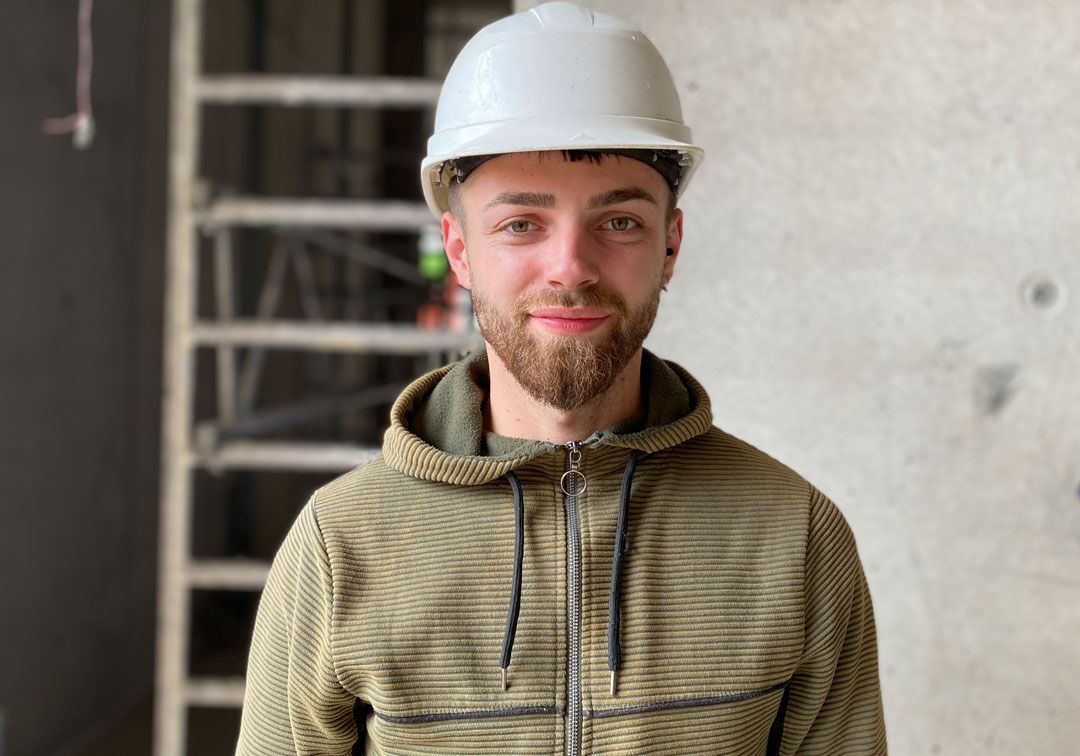
Roman Relu comes from Suceava in north-east Romania, a city on the Moldau river with around 100,000 inhabitants. Its image is characterised by a castle from the 14th century, which was the main residence of the Moldovan princes for almost 200 years. Since he loves his homeland, the 24-year-old takes every opportunity he can to go back and visit Romania – the country he left six years ago to work on Western European building sites. He was employed in the UK for over three years, which is why he does not yet speak German particularly well but is fluent in English. At the Museum Reinhard Ernst, Roman is the Jack of all trades, and he lends a helping hand whenever it is needed. The resident of Offenbach by choice is mapping out his life with a sense of purpose. Two years ago, he bought a house in Suceava. The following year, he married his Romanian girlfriend who works at a restaurant in Frankfurt. And in two years he would like to return to his home town with his newly wedded wife and open his own restaurant there. His faith in the Almighty with these ambitious plans is proven by an unmistakably large tattooed passion cross on his neck.